 Latest Breaking News Online News Portal


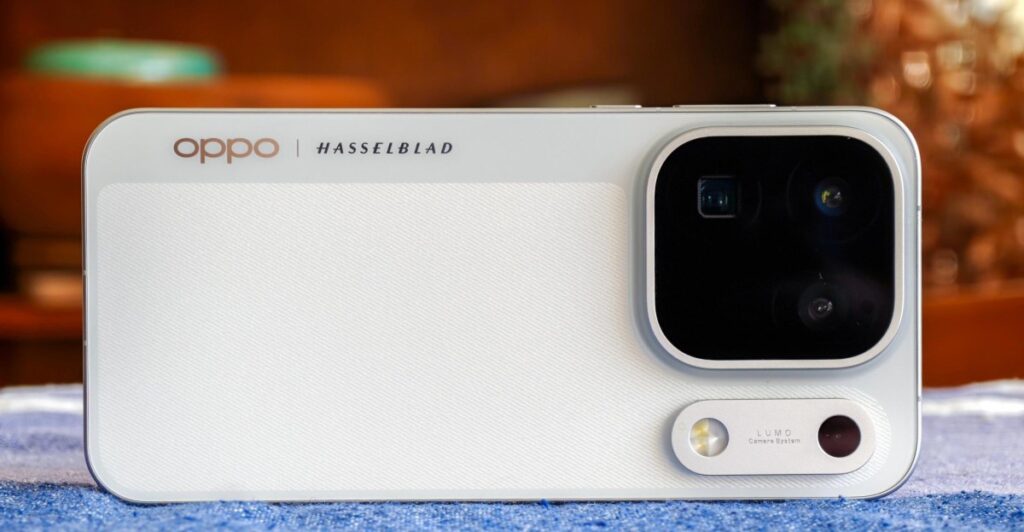
Oppo’s Find X10 Pro Max is the first phone with a triple 200-megapixel camera, which you’re likely to see as either a masterful feat of engineering or a load of hyped-up marketing nonsense. The truth is somewhere in the middle.
We’ve seen 200-megapixel cameras in phones before, starting with 2022’s Moto X30 Pro. This year’s Vivo X300 Ultra was the first phone to feature two of them — with 200-megapixel main and telephoto cameras — and is still my favorite camera phone on the market. With the Find X10 Pro Max, Oppo is trying to do one better: It’s the first to use a 200-megapixel ultrawide camera too. Only the selfie camera runs at a more modest 50 megapixels.
The Find X10 Pro Max’s cameras are excellent, lagging only a little behind the company’s top-tier Find X9 Ultra from earlier this year (in Oppo’s product lineup, as with rivals Xiaomi and Vivo, Pro Max phones still sit just below its top Ultra models). That’s only partly thanks to the megapixel count.
The point of all those megapixels isn’t really to take 200-megapixel photos (though you can if you see fit — more on that later). Instead, like just about every phone camera from the last few years, Oppo is taking advantage of pixel-binning, which combines multiple nearby pixels into one. This gets you the best of both worlds: extra detail captured by the small, individual pixels and superior light capture from merging them together.
One of the interesting changes Oppo has made is to actually reduce how much binning it uses. While most Android phones capture photos at 12 or 12.5 megapixels, regardless of their sensor resolution, the Find X10 Pro Max defaults to 26 megapixels across all three rear lenses, from 0.5x up to 9.9x zoom. That’s a similar resolution to Apple’s top iPhones, which now default to 24-megapixel shots across their 48-megapixel sensors, but still unusual for Android.


By default, it means that shots from this phone are more detailed than on other Android rivals, and better suited to printing or cropping into. File sizes end up a little larger, of course: The Find X10 Pro Max’s 26-megapixel photos are typically 8 to 12MB, while 12.6-megapixel shots are closer to 4 to 6MB, though there’s a lot of variation.
Binning to 26 megapixels rather than 12.6 has an obvious disadvantage beyond storage concerns, though: Less binning means worse light capture. In most light conditions that isn’t an issue, though, and the phone is smart enough to adapt when it becomes one, automatically dropping to 12.6 megapixels in darker scenes, sacrificing a little detail in order to maximize light when it’s in short supply.
If you need high-resolution shots — or just want to force the matter and override the phone’s automatic adjustments — a high-resolution mode lets you shoot in either 50 megapixels or the full 200. Here file size balloons further, with 45 to 60MB files at the max resolution, but the 16,384 x 12,288 files are large and detailed enough to print at some size. To my surprise, I haven’t even seen much of a drop in low-light performance or dynamic range from shooting in this mode, though some difference will be inevitable in the darkest conditions.


The thing with camera sensors, especially in a phone, is that resolution is only one factor — and not the most important. Sheer size matters more, which is why Oppo’s Find X9 Ultra still has an edge. The Find X10 Pro Max’s main camera uses a 1/1.3-inch-type sensor and an aperture of f/1.5, while its 3x telephoto is a little smaller at 1/1.56 inch, with a slower f/2.1 aperture. Both equivalents on the older Ultra phone use larger sensors capable of capturing more light even before pixel-binning kicks in. Only the ultrawide is improved here, with both a higher resolution and a bigger 1/1.56-inch sensor than the Ultra.
But those upgrades to the ultrawide are crucial, because they help make this rear camera feel like a complete package. There’s no drop-off in resolution across the rear lenses, and only small shifts in sensor size and aperture. That means quality is consistent across the cameras, though the colors still vary a little, something I’d hope to see fine-tuned over time.
Part of the difference likely comes down to one feature you’ll only find on the main camera: what Oppo calls “DeepPix” dynamic range. It’s similar technology to LOFIC, seen on the likes of Xiaomi’s 17 Ultra and the recent Vivo X500 Pro Max, expanding dynamic range by capturing more information from highlights. Here, it enables a 17-stop dynamic range on the main camera, keeping light sources bright and punchy in nighttime scenes without blowing them out entirely. Only a handful of phones can match this, and none that you can buy in the US.
1/3
That’s just the hardware. Photos are once again boosted by tuning from Hasselblad, with some of the techniques applied in the dramatic, filmic Hasselblad Master Mode now pulled into the main camera too, primarily less-saturated colors and deeper shadows. The Master Mode still pushes the effect further if you prefer. Eighteen built-in film simulations allow more varied color profiles, and each can be tweaked further with a simple grid that adjusts tone and saturation.

Video has its own tricks. All three rear lenses can record at up to 120fps in 4K or 30fps in 8K, and a Pro Video mode lets you apply LUTs, record with Oppo’s O-Log2 for more post-production options, and even shoot in open gate, taking full advantage of the full sensor.
Oppo’s high-end hardware accessories are back too. A teleconverter lens can be mounted on top of the telephoto lens for improved long-range photography, while a video accessory kit from Tilta includes cooling, a light, a substantial camera grip, tripod mount, polarizing filter, and more.
I haven’t even spoken about the rest of the phone: a big 7,150mAh battery (even bigger outside of Europe at 8,000mAh) that lasts two days easy; a MediaTek Dimensity 9600 Pro chipset that hasn’t stuttered once; a 144Hz, 1.5K OLED display with 3,600 nits of peak brightness. Perhaps just as importantly, a design that fits all those camera specs into a relatively modest camera island, instead of the colossal ring of lenses that’s become typical on Chinese Ultra phones.

In a flagship phone like this, none of that matters as much as the cameras. Meanwhile, Oppo’s marketing team would have you believe that in a camera like this, nothing matters as much as the megapixels.
That’s not entirely true. The Find X10 Pro Max’s camera is really as good as it is because all three lenses use fairly large sensors; because the impressive Hasselblad color science has been further refined in the default camera mode; because the main lens has an almost unprecedented dynamic range for a phone. The extra megapixels are the cherry on top.
Photography by Dominic Preston / The Verge