 Latest Breaking News Online News Portal


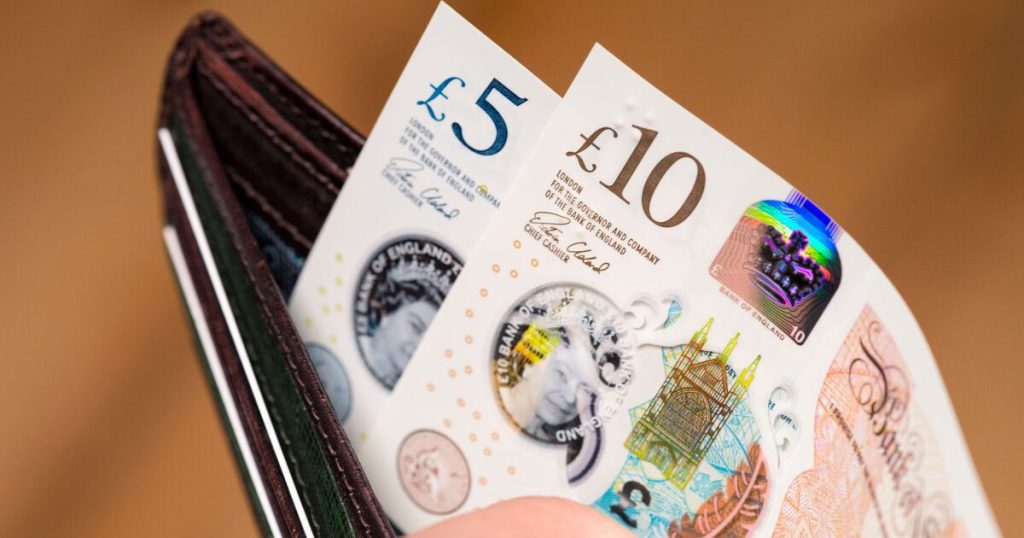
New state pensioners across the UK are set to receive a weekly payment increase from the Department for Work and Pensions (DWP) in April next year.
The boost falls under the triple lock guarantee, which determines how much the Government increases State Pension rates at the start of each new tax year in April. The new rates are determined by whichever is the highest out of three factors – known as the ‘triple lock’. These are the consumer price index (CPI) measure of inflation (measured for September in the previous year), average wage growth between May and July of the previous year, or 2.5%.
According to financial experts, pensioners are currently on course to get a 4.8% boost to their State Pension payments in 2026, in line with average wage growth, as this is the highest out of the three factors.
Office for National Statistics (ONS) data released on October 14 showed an upward revision to total wage growth, including bonuses, for the quarter to July, up to 4.8%, from 4.7% in a previous estimate.
By comparison, CPI inflation for September was 3.8%, according to ONS figures. As this is lower than average wage growth, it is expected that the higher figure of 4.8% will be used to set the new State Pension rates from April.
The increase would mean pensioners receiving the full new State Pension would see their weekly rate increase from £230.25 per week to 241.30 in 2026, amounting to an extra £11.05 each week from April.
Over the course of a year, this would result in pensioners receiving a total of £12,574.60 in pension payments, up from £11,973, providing retirees with an annual boost of £600.60.
As the UK’s State Pension system is split into two schemes – basic and new – the amount of pension payments will go up from next April, depending on when you retire.
Everyone eligible for the basic State Pension has already reached State Pension age, and to get the new State Pension, you must have been born on or after April 6, 1951, if you’re a man, or born on or after April 6, 1953, if you’re a woman.
Older pensioners who get the full basic State Pension are on course to see payments increase from £176.45 per week to 184.90 per week in 2026, a rise of £8.45 each week
Over a full year this would amount to £9,614.80 in pension payments (up from (£9.175.40), giving older pensioners on the full rate an extra £439.40 annually.
The boost to both the basic and new State Pension is on course to be higher than previously thought, after total wage growth, including bonuses for the quarter to July, was revised upwards from 4.7% to 4.8%.
But the increase could mean that more pensioners will soon start paying tax on their State Pension as the rates may take them over the personal allowance threshold.
Alice Haine, personal finance analyst at Bestinvest by Evelyn Partners, the online investment platform, said: “For pensioners, the latest inflation data suggests another inflation-beating boost to the annual State Pension payment is coming their way next April.”
She added: “The personal allowance has remained at £12,570 since the 2020-21 tax year, so unless the Chancellor revises this in the Budget, more retirees may find themselves paying a tax bill.
“Of course, some will already be paying tax on their retirement income, either because they deferred access to the State Pension or because they also receive income from a private pension.”