 Latest Breaking News Online News Portal


New Harbinger Publications 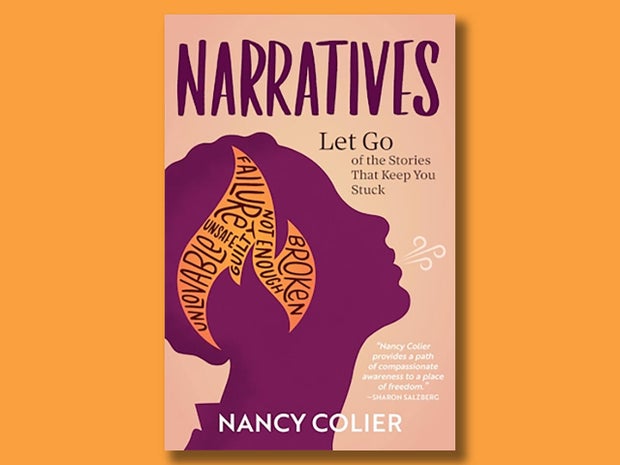
We may receive an affiliate commission from anything you buy from this article.
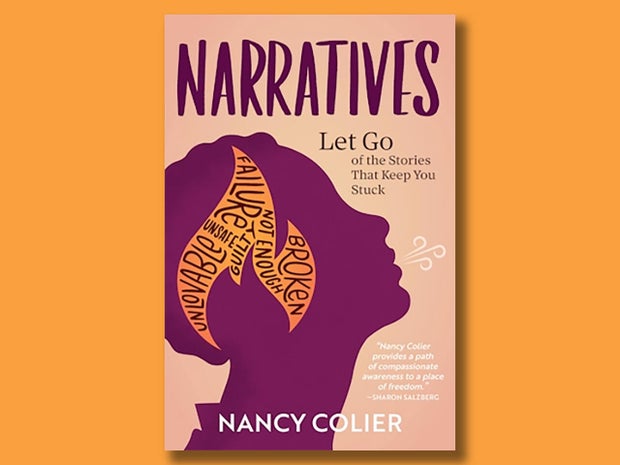
In her latest book, “Narratives: Let Go of the Stories That Keep You Stuck” (to be published Nov. 3 by New Harbinger Publications), psychotherapist Nancy Colier writes about how the stories we tell ourselves about ourselves can hold us back from living a more truthful and connected life.
Read the excerpt below, and don’t miss Susan Spencer’s interview with Nancy Colier on “CBS Sunday Morning” Oct. 4!
Legend has it that Harry Houdini failed at only one publicly performed escape attempt. As the story goes, Houdini accepted an invitation to escape a maximum-security jail cell, in order to display and prove his skills. But despite working all his lock-picking magic for hours, he simply couldn’t get it to open. Defeated and exhausted, he collapsed against the cell door only to discover that it swung open on its own. Turns out, it was never locked in the first place. The only place the door was locked was inside his mind; he was a prisoner only in his story of imprisonment.
All too often it’s not life that imprisons us, but the stories we tell ourselves—about our life. The narratives inside our heads are the real obstacles to freedom and happiness.
And so begins our story…
My friend Francesca was incensed. She’d been invited to be a bridesmaid at her friend’s destination wedding in the Bahamas. In the story she told me, the bride had only asked her to be a bridesmaid because she assumed that Francesca would never get married herself. And, because she couldn’t possibly have other plans and therefore could just slip off for a four-day trip to the Bahamas at the drop of a hat—with only nine months’ notice! In my friend’s narrative, the invitation to be a bridesmaid in the Bahamas was insulting and humiliating; the bride obviously thought she was pathetic, and was “throwing her a bone.”
A few days later, I was eavesdropping at my local diner—my favorite laboratory for human behavior. At the next table, a couple in their midforties were chatting about a movie they’d just seen. As the waiter zoomed by without stopping, the man became visibly agitated. I heard him tell his partner that it was the third time the waiter had “ignored” him and that if he were “a somebody who people respected,” then they would already be enjoying their burgers. When the server finally did arrive, sweat bubbling above his lip, I heard this man aggressively asserting that the young man should be less obvious about whom he deems important enough to serve. My dining neighbor was just a normal person doing what normal people do, creating a story and crafting meaning. But the particular meaning we make—the specific story we tell ourselves—this is our personal narrative and, more than anything else, what determines our reality. Just this morning, I was late to meet a colleague because I unexpectedly had to take my daughter to the doctor. Not long into our meeting, my colleague made a comment about not being able to rely on anyone and always having to take care of herself. When I asked her what she meant by that, she brought up the fact that I’d been late despite our having twice confirmed the time. I had been late, that part was true, but she’d also never asked why or inquired about what happened on my end. And ironically, she’d told me many times that I was someone she could count on, and how much she appreciated that aspect of our relationship. In the nine minutes she’d been waiting for me to arrive that day, she’d written a comprehensive story that used my tardiness as an endorsement for her preexisting narrative. Needless to say, this compelled me to get home and keep writing this book.
One World … Billions of Universes
Everyone we know (including ourselves) is walking around with a personal movie playing inside their head—a movie they’re fully absorbed in and believe is real. If that weren’t strange enough, we’re also all assuming that our movie is the same movie everyone else is watching, and the only one showing. In a nutshell, our movie is reality. Unfortunately, we’re all thinking the same thing.
Usually, the only thing that’s the same in all our movies is the person playing the main character. The star of the story is our self—the me character. How is this experience for me? Do I like it or not? Does it bring me pleasure or pain, serve me or harm me? Boiled down, this is what we want to know. Our narrator writes her story from a first-person POV and creates a world in which everything reflects, relates to, and, ultimately, is about us. Not because we’re all raging narcissists, but because under our stories lies a basic drive to do two things: create meaning and survive. Our stories, in one way or another, are always trying to make it possible for us to survive as a distinct and identifiable self.
From the cradle to the grave, we’re weaving our perceptions into a cohesive personal storyline. We create a plotline that makes sense of reality and makes the world feel knowable. Our stories help us create a consistent and cohesive self, which we need to function in the world.
Problems arise because we don’t realize we’re watching a personal movie inside a personal cinema, a movie that no one else is watching. We become the character in the movie and imagine that everyone else is also the character we’ve scripted them to be. We then respond and react with this assumption, believing that others are operating with the intentions and emotions we’ve designed for them. The movie playing in our head is not our reality, it’s the reality; it’s not just what we’re seeing, it’s what is. And yet, in actual reality, what we’ve deemed reality is just a bundle of interpretations created by a biased narrator and run through a highly curated lens, shaped by a unique and personal history and edited to fit into our already existing sense of self.
We don’t just believe our story, however; we also will do whatever it takes to defend it … no matter what the cost is. Have you ever noticed that the stories you tell yourself often don’t support or encourage you, help your relationships, or make you happier? And in fact they often make you unhappier? And yet, you hold on to them. Even when the facts directly contradict your story, you can’t be dissuaded from its beliefs. Your loyalty is to your story—not your happiness.
From “Narratives: Let Go of the Stories That Keep You Stuck” by Nancy Colier, published by New Harbinger Publications. Copyright © 2026 by Nancy Colier. Reprinted by permission of the author.
Get the book here:
“Narratives” by Nancy Colier
Buy locally from Bookshop.org
For more info: