 Latest Breaking News Online News Portal


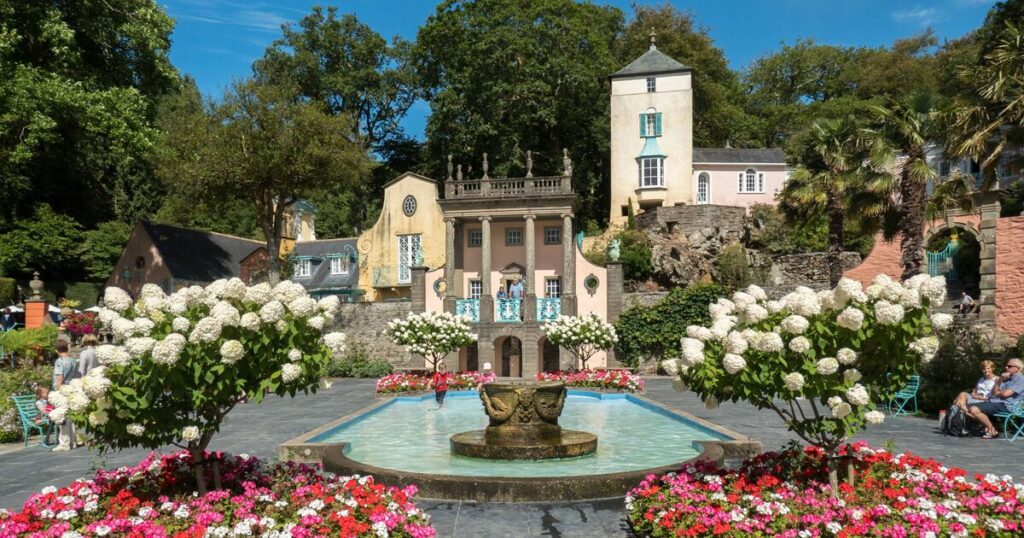

The enchanting UK village will looks like it could be in the Italian Riviera (Image: jacquesvandinteren via Getty Images)
With the cost of foreign holidays continuing to rise and airport chaos becoming an unwelcome summer tradition, more and more Britons are discovering that the perfect getaway might be closer to home than they think.
If you haven’t yet made up your mind on the perfect staycation destination, one remarkable village in North Wales might just make up your mind.
Tucked away on the cliffs of Gwynedd, Portmeirion is the kind of place that makes you do a double take. With its sun-drenched pastel facades, cobbled piazzas and sweeping coastal views, it looks every bit as though it belongs on the Italian Riviera — yet it’s entirely British, and entirely extraordinary.
It was designed and constructed by Welsh architect Sir Clough Williams-Ellis between 1925 and 1976. His aim was to demonstrate that developing a naturally stunning location need not ruin it.
The village is managed by a charitable trust and is renowned for its colourful, pastel-hued Mediterranean architecture, picturesque woodlands, and unique position in popular culture.

The village functions primarily as a hotel resort where guests can remain after hours. (Image: CHUNYIP WONG via Getty Images)
Williams-Ellis created the village as a “post-modern bricolage”, utilising salvaged elements from demolished historic structures throughout Britain. It boasts a central piazza, a giant human chessboard, a Riviera-style layout, and a lighthouse.
A 70-acre subtropical forest also encircles the village. It contains 19 miles of pathways, concealed gardens, a ghost garden, a dog cemetery, and exotic trees including giant redwoods and monkey puzzles.
Portmeirion may also be familiar to viewers as the filming location for the cult 1960s psychological spy thriller, The Prisoner. Devotees regularly visit the dedicated Prisoner Shop located on-site.
Ceramics enthusiasts can also explore Portmeirion Pottery, the internationally renowned pottery brand established in 1960 by the architect’s daughter, Susan Williams-Ellis, who drew upon botanical motifs inspired by the village. Discounted earthenware can be purchased at the local shops.
While thousands arrive for day trips, the village functions primarily as a hotel resort where guests can remain after hours.
Numerous grand hotels are available for accommodation, alongside 13 self-catering cottages dotted throughout the village, plus multiple cafes, an authentic Italian gelateria (Angel Ices), and formal dining rooms.
Day visitors are required to purchase an admission ticket to access the grounds.
Given its cliffside, coastal position, numerous paths within the village and ascending from the estuary are steep, hilly, and may prove difficult for those with limited mobility.
The village benefits from excellent transport connections. It sits just a 1-mile walk or taxi journey from Minffordd Railway Station, which serves both local lines and heritage steam trains such as the Ffestiniog & Welsh Highland Railways.
One visitor called Bec recently shared her experience of visiting Portmeirion on her Instagram page. Despite having just 3,000 followers, Bec’s post went viral – amassing more than 38,000 likes from fellow travel enthusiasts.
Although Bec called it “the weirdest UK village”, she went on to say that Portmeirion ‘looks like an Italian seaside town’, despite being situated in North Wales.
She also stated that once the tourists are gone for the day, you ‘have the whole village to yourself’.
Bec wrote: “Walking around after dark felt like wandering through a film set.”
She also showcased the village’s spectacular views, declaring: “I’ve never been happier to wake up early.
“I think I said, ‘this is so pretty’, every thirty seconds.”
Bec also labelled Portmeirion a “must-visit for anyone who supports architectural whimsy”.
Following up in the caption, she wrote: “It’s a little bit Disneyland for adults who enjoy cruises… (affectionately). I’ve wanted to visit Portmeirion for years and it lived up to every expectation.
“It’s unlike anywhere else in the UK, with colourful Mediterranean inspired buildings and baroque architecture and beautiful views across the estuary. During the day it’s very busy (understandably), and I found it a bit overwhelming… but then everyone went home.
“Walking around after dark and again before breakfast the next morning completely changed the experience. You could actually stop, look around and appreciate how strange and beautiful the place is.”
She concluded: “One I’ve wanted to tick off for years, and I’m so glad I finally did.”
One viewer replied: “Fantastic find,” while another added: “I’m so jealous, I love it there but never stayed!”.
While a third chimed in: “Its very pretty and photogenic.”
However, someone else not so keen wrote: “Don’t fall for the hype. Major tourist trap at £20 each to get in and only really cafes inside.”