 Latest Breaking News Online News Portal


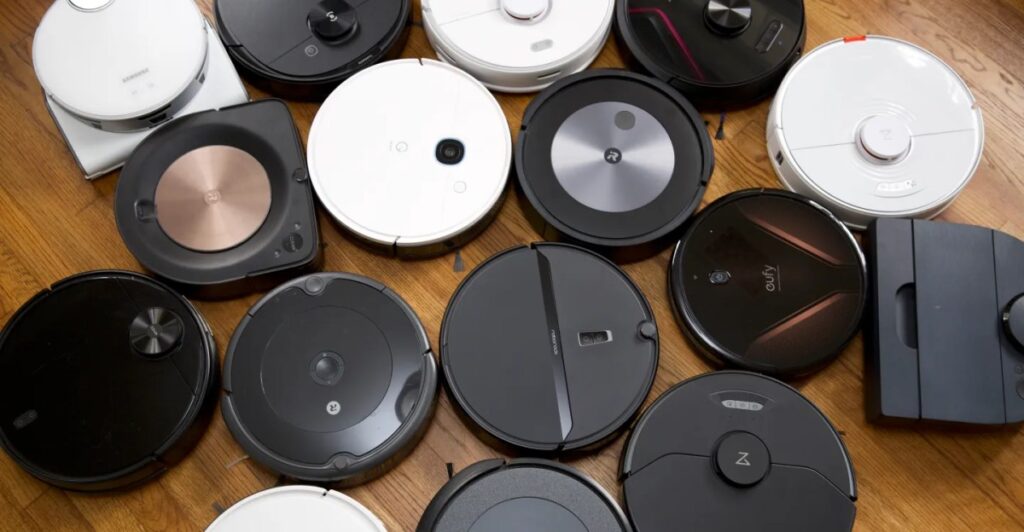
No other gadget knows as much about your home as a robot vacuum. They map your space, learn your routines, and many now carry a camera and microphone into every room in your house. As AI gives them a better understanding of what they see, the privacy and security risks these autonomous robots pose are only growing.
That’s why greater scrutiny makes sense, but the ban on foreign-made mobile robots issued by the Federal Communications Commission earlier this week — implemented to address “unacceptable risks to the national security of the United States or the safety and security of United States persons” — doesn’t actually judge products by how secure they are, just where they’re built. It effectively means no new robot vacuums from major companies can enter the US market unless they are built here. And spoiler alert: none are.
This ban means Americans will see fewer new models, slower innovation, and more expensive robot vacuums.
Cybersecurity and manufacturing are not the same thing. If the goal is safer robot vacuums (and robot lawnmowers, companion bots, humanoids, and all the other robots this ban sweeps up), this policy misses the mark. A meaningful security standard for robots would require encrypted map storage, security audits, vulnerability disclosures, and clear data retention policies.
Instead, this ban means Americans will see fewer new models, slower innovation, and more expensive robot vacuums. In short, we’ll get worse vacuums than those we have today.

I’ve been covering and testing robot vacuums for over a decade, and have seen dozens of privacy and security stories. The fear that your robot vacuum could spy on you or leak your data isn’t paranoia; it’s a well-documented fact that we have personal experience with here at The Verge. Many of the industry’s largest manufacturers — including Dreame, Ecovacs, Roborock, iRobot, and Shark — have suffered security vulnerabilities or data breaches.
Those failures don’t point toward regulating manufacturing, but toward the need for stronger cybersecurity requirements, like those defined by the government’s Cyber Trust Mark program. But that program doesn’t exist yet, and if it ever does, it will be entirely voluntary.
This manufacturing ban applies to any foreign-made robot, but footnotes in the FCC’s public notice indicate that China is a particular concern, warning that foreign governments could use vulnerabilities found in advanced robotics to access sensitive data. China’s commerce ministry has already called the policy “discriminatory and suppressive against Chinese companies and products.”
A robot vacuum made in Massachusetts isn’t automatically more secure than one made in Shenzhen.
There are real security advantages to domestic robot production. Mehul Nariyawala, president and co-founder of Matic, the only robot vacuum currently assembled in the US (although with too many foreign parts to be considered US-made), points out that domestic manufacturing makes it easier to ensure there are no hardware backdoors and to hold companies accountable for any failures.
But a robot vacuum made in Massachusetts isn’t automatically more secure than one made in Shenzhen. And the FCC’s ban doesn’t actually take steps to ensure they will be.
The robot ban is a carbon copy of those the FCC has issued to Wi-Fi routers and drones over the last few months. So far, it has already granted several waivers to router companies that don’t appear to be moving their manufacturing to the US, which the waivers require. This raises questions about how consistently and fairly the new rules will be enforced and whether they can actually achieve their intended effect.
Today, the practical consequences won’t be better security — the millions of robot vacuums already in American homes remain unaffected, as do any currently sold models. If these really are a risk, and we’ve seen plenty of evidence they can be, why leave the largest source of that risk exactly where it is?
In an optimistic future, the ban could spur American manufacturing. Nariyawala believes it “creates the conditions for American startups to design, engineer, and build all manner of trustworthy robots at scale.” He adds that consumer robots are where robotics manufacturing reaches scale, and the supply chains they require are the same ones defense, industrial, and healthcare robots will depend on. “Get it right, educate customers to demand it, and that domestic supply chain stops being an aspiration and becomes an industry.”
But even if he’s right, that transition will take years. Today’s Matic relies heavily on imported parts, and its price is going up to $1,450 next month, showing how far building these products in the US is from replacing the $300 robot vacuum you can buy at Walmart. Meanwhile, restricting the import of new products means US households will miss out on the next wave of innovations in a fast-moving category.

Chinese manufacturers may have started out as fast followers, but they have transformed the robot vacuum industry over the past decade. Fierce competition brought better navigation, improved obstacle avoidance, self-emptying docks, and much better mopping systems. That competition also squeezed American manufacturers out of business; iRobot, the American pioneer in this space, filed for bankruptcy last year and is now owned by its Chinese manufacturing partner.
“We see this as part of a broader moment for US robotics, one where the opportunity lies in building domestic leadership.”
— Colin Angle
Without that competitive pressure, progress in the US market will slow, and prices will rise. But the competition I would most like to see isn’t who can build the wildest appendages or produce the highest suction power — it’s competing on privacy; I want a robot vacuum that doesn’t require an internet connection to clean my house, maps that stay on the device instead of the cloud; object recognition that runs locally instead of on remote servers; and clear explanations of what data leaves my house and why.
Matic does much of this today, which is one reason it’s my top pick of the many robot vacuums I’ve tested, but it’s a high price to pay for what should be easy features to deliver.
It feels too late to save the American robot vacuum industry, but iRobot co-founder and former CEO Colin Angle, whose startup Familiar Machines & Magic is developing a robotic companion that could fall under this ban, supports its stated goals. “We see this as part of a broader moment for US robotics, one where the opportunity lies in building domestic leadership,” he told me. “That means continued investment in domestic manufacturing, R&D, and talent, and we’re committed to being part of that effort as the category grows.”
If that is the goal, it may well succeed, but only because it shuts out the competition — which is the same thing Angle argues the Chinese Government did to help its burgeoning robot vacuum market. But if the goal is making robots more secure, we’re still floundering.

Meanwhile, Chinese robot vacuum makers and their US-based users are in limbo. Current products will continue to work and be sold, but the path forward is murky at best. The FCC has said existing robots can get updates at least through January 2029, but then what?
Kristen Marion, global PR brand lead at Eufy, owned by Anker, told me that they plan to continue to sell, support, and update existing products, adding that “Like others across the industry, we are seeking further clarity on how the rule will be applied to future products, and we will keep our customers informed.” Narwal was more bullish. Yunlin Kong, president of Narwal Overseas Business, told me, “We’re not going anywhere. The US is one of our most important markets, and our commitment here is unchanged.” I reached out to several other Chinese manufacturers who either said much the same thing or politely declined to comment.
The concerns driving the ban are legitimate. Robot vacuums deserve more scrutiny than they’ve received, especially as AI expands their capabilities far beyond the original purpose of cleaning our floors. But a broad manufacturing ban that ignores what’s already in your house and can’t tell a secure product from an insecure one isn’t solving that problem. It’s just slowing down the only thing that’s actually worked in our favor: competition. If the government wants safer robot vacuums, don’t regulate where they’re made; regulate how securely they work.